

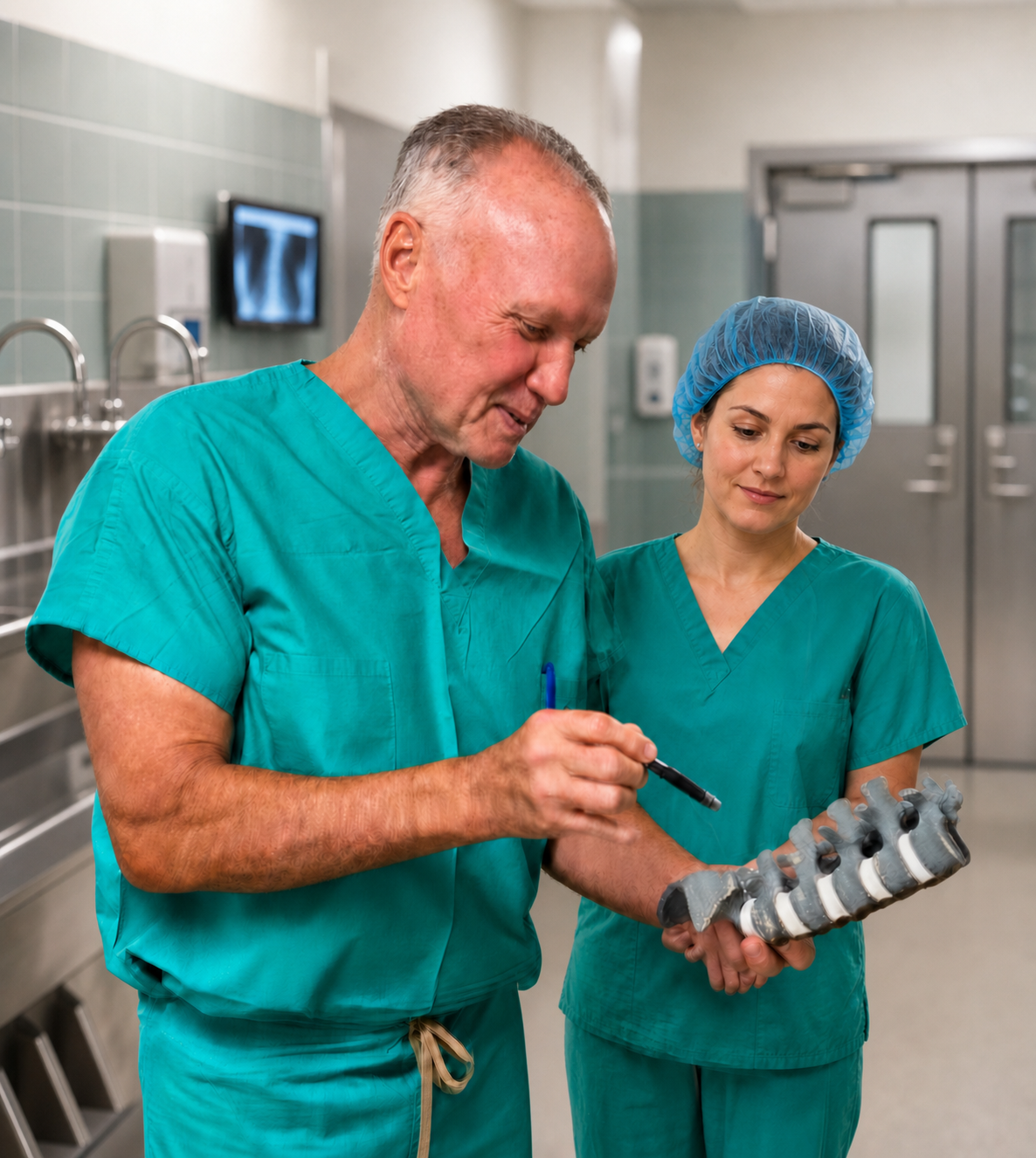
At the Orthopedic and Spine Institute, Dr. Johnston provides comprehensive orthopedic care for musculoskeletal conditions and injuries from motor vehicle accidents, workplace accidents, slip and falls, and more.
Dr. Johnston and his support staff are dedicated to delivering exceptional patient care and making sure that the written record is accurate, understandable and complete.
Independent Medical Evaluations (IMEs) at OrthOpinions are performed by F. Allen Johnston, MD, board-certified orthopedic surgeon with 40 years of orthopedic practice. Referrals come from judges, workers’ compensation carriers, and attorneys. We thoroughly review the file, put it in chronological order, and then render opinions on causation, appropriateness of treatment to date, diagnoses, the need for additional testing, the need for surgery, physical therapy, interventional injections, work capability, permanent physical impairment, and related medical questions.
Our office routinely handles cases with records as extensive as 5,000+ pages. Our staff is skilled at breaking them down, finding the most important parts, summarizing them, placing them in chronological order, and making sense of what is sometimes hundreds of pages of duplicate copies, poor copies, poor-quality copies, and handwritten notes. That work turns a disorganized stack of paper into a workable clinical timeline.
Records and evidence are the puzzle pieces. Our job in an IME is to develop, from those pieces, the medically supported picture of the individual patient’s condition, causation, treatment, work capability, and impairment. That is the painting Dr. Johnston paints for the independent medical examination.
Our practice is on the cutting edge and incorporates artificial intelligence as one of the modern tools we use to improve patient care and clarify difficult medical cases. Anything entered into an AI tool is de-identified 100% of the time, so what the tool sees is a hypothetical case, not a real patient. Dr. Johnston then considers that analysis when applying his own independent medical judgment. The final analysis and opinion are Dr. Johnston’s alone.
Opinions are grounded in current medical literature and 40 years of practical orthopedic experience. Reports are structured, timely, and defensible under cross-examination.
Office: 7612 Picardy Avenue, Suite G, Baton Rouge, LA 70809 · Referrals and scheduling: (225) 751-6666
An IME engagement begins with intake of the referring party’s records. Once received, our staff performs the initial pass — de-duplicating, chronologically ordering, and flagging the imaging, operative reports, therapy notes, and prior evaluations that will carry weight. Dr. Johnston then reviews the organized file, and when a physical examination is part of the referral, the patient is seen at 7612 Picardy Avenue, Suite G. The examination is focused, orthopedic, and directed at the questions the referring party asked.
The written report is structured for the reader: identification and the questions posed; a chronological history drawn from the record with page-level references; imaging and operative findings; examination findings when performed; and a discussion tying diagnoses, causation, treatment appropriateness, and remaining medical questions back to the record. Impairment ratings, when requested, follow the AMA Guides, 6th Edition.
Scope covers the full breadth of orthopedic and spine practice: cervical, thoracic, and lumbar spine; shoulder, elbow, wrist, and hand; hip, knee, foot, and ankle; degenerative, traumatic, and post-surgical conditions. Cases outside orthopedic scope are declined rather than opined on. Turnaround is quoted at intake based on record volume and complexity, and updates are provided when material new records arrive.
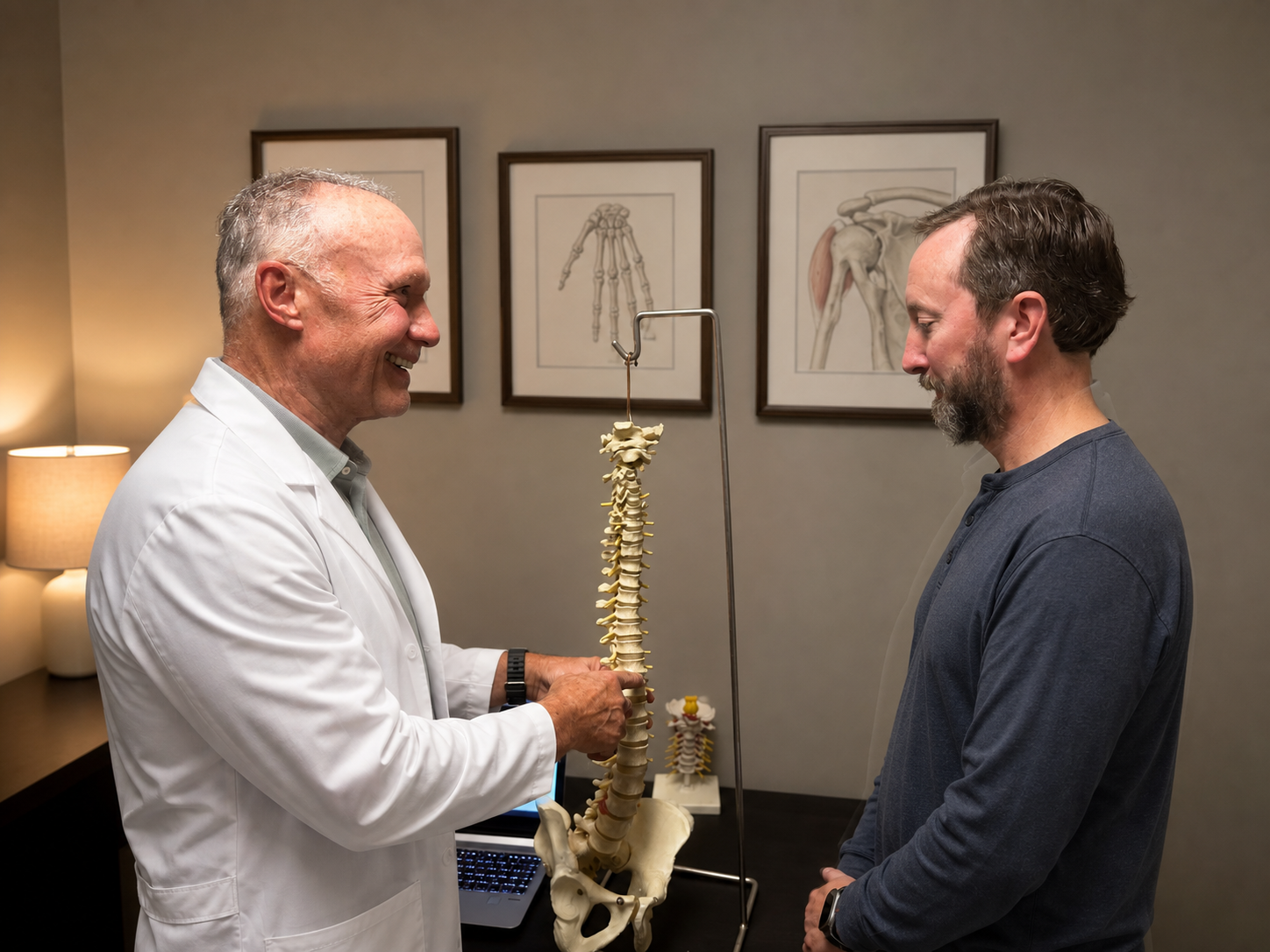
Comprehensive Case Review is the foundation of every opinion we render. Cases arrive from judges, workers’ compensation carriers, attorneys, and treating physicians. Our office has taken records as extensive as 5,000+ pages. The staff is skilled at breaking them down, finding the most important parts, summarizing them, placing them in chronological order, and helping make sense of what is sometimes hundreds of pages of duplicate copies, poor copies, poor-quality copies, and handwritten notes.
From that organized record we render opinions on causation, appropriateness of treatment to date, diagnoses, the need for additional testing, the need for surgery, physical therapy, interventional injections, work capability, permanent physical impairment, and related orthopedic questions. Where imaging is central, MRI, X-ray, CT, and operative reports are read alongside the clinic notes and patient-completed intake forms rather than in isolation.
The records and evidence are puzzle pieces. Comprehensive Case Review assembles them into a coherent clinical picture. That is the painting Dr. Johnston paints in the case review, and it is the picture that carries forward into any expert testimony or independent medical evaluation that follows.
Our practice is on the cutting edge and incorporates artificial intelligence as one of the modern tools we use to improve patient care and clarify difficult medical cases. Anything entered into an AI tool is de-identified 100% of the time, so the tool receives a hypothetical case that Dr. Johnston then weighs against the real record when forming his opinion. AI is one piece of the puzzle, alongside MRI interpretation, operative reports, clinic notes, and patient-completed forms. The final medical analysis and opinion are Dr. Johnston’s alone.
All reasoning is grounded in current medical literature and 40 years of practical orthopedic experience.
Office: 7612 Picardy Avenue, Suite G, Baton Rouge, LA 70809 · Referrals and case review: (225) 751-6666
The starting point is the records themselves. Referring parties send the file as paper, PDF, or a hosted link, and our office confirms receipt, pages counted, and any obvious gaps. Missing operative reports, imaging discs, or updated therapy notes are flagged for the referring party before the review moves forward, so the opinion rests on the actual record rather than on assumptions about it.
The deliverable is a written narrative summary. Findings are presented chronologically, event by event, with page references so any reader can trace an opinion back to the source. Imaging is described in the terms used by the reading radiologist and, where relevant, correlated with the operative and clinic notes rather than read in isolation. Where the record contains conflicting entries, such as inconsistent mechanism of injury, conflicting exam findings, or unexplained treatment gaps, those inconsistencies are surfaced rather than smoothed over.
When a live conversation with the patient would materially clarify the record, a video consultation is offered through the Video Conferencing option described below. That call is a supplement to the record, not a treating relationship, and its purpose is to close specific gaps the paper record leaves open.
Technologies, including video conferencing, phone calls, and mobile apps, allow our OrthOpinions team to interact with patients remotely.
The ability to communicate with a remote patient provides clarity and context to the medical record review. This can expedite the review process and ensure a more accurate OrthOpinion.
An impairment rating is a medical assessment that quantifies an individual’s physical impairment and the extent of functional loss. It is expressed as a percentage of loss of the injured extremity or of the whole person.
Impairment Ratings are commonly used in workers’ compensation cases, disability claims, and by insurance companies to establish benefits or compensation eligibility. The assessment follows criteria set forth by the AMA 6th Edition Guide to Rating Permanent Physical Impairment.
A second opinion offers a patient either confirmation of their diagnosis and treatment plan or an alternative perspective. This is usually initiated by the patient, their representative, or another healthcare provider.
A doctor-patient relationship is established, and the doctor may provide ongoing care. It is typically sought when facing a major medical decision, dealing with a complex diagnosis, or when there is uncertainty about the diagnosis or treatment. The focus is primarily on patient care.
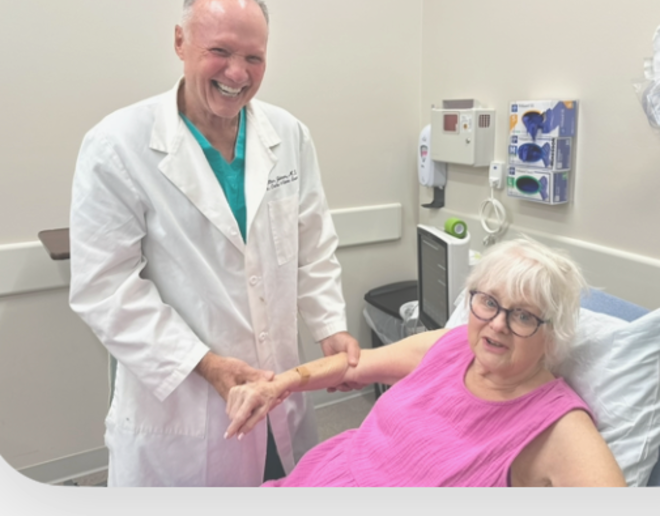
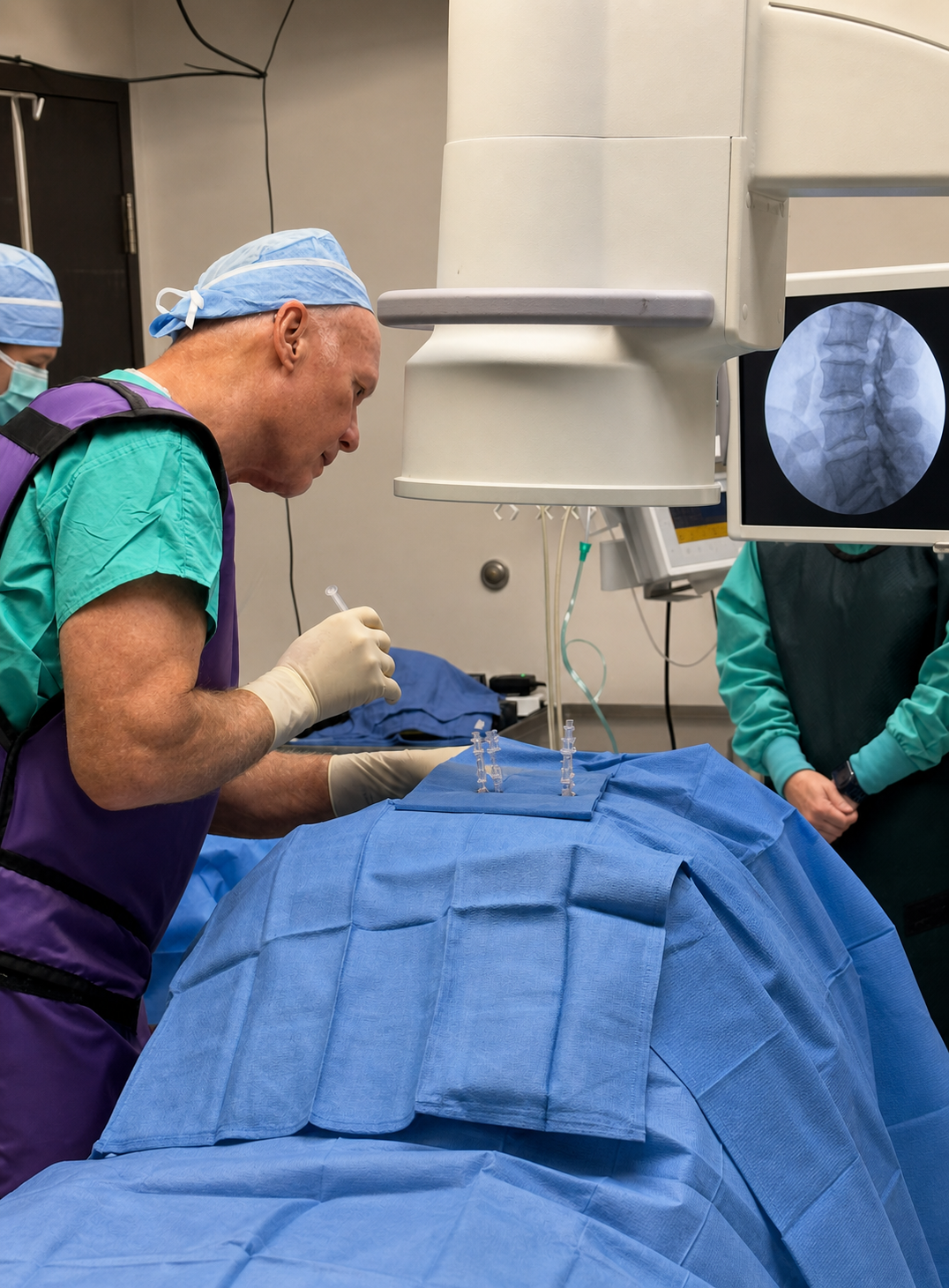
Expert Witness work has been part of Dr. Johnston’s entire career. He is able to explain fairly complex medical jargon and orthopedic procedures in simple, understandable language that a jury and a judge can make sense of. More often than not, his expert opinion has been rendered as a treating physician, but he has also served as a second-opinion physician and as an IME physician rendering opinion. He is not afraid to hold an opposing view from another physician and will stand by his opinion, which is developed from current medical literature and 40 years of practical orthopedic experience.
Testimony ranges from independent medical examinations to treating-physician opinions in workers’ compensation, personal injury, and product cases. He testifies in deposition and at trial, in state and federal court, and works with plaintiff and defense counsel. Every opinion traces back to the record: chart review, imaging, operative and clinic notes, and, where relevant, examination.
Records and evidence are the puzzle pieces. Comprehensive Case Review assembles them into a coherent clinical picture. The Expert Witness role is to explain that picture clearly to judge and jury, without medical jargon and without overstatement. That is the painting Dr. Johnston paints as an expert witness.
Our practice is on the cutting edge and incorporates artificial intelligence as one of the modern tools we use to improve patient care and clarify difficult medical cases. Anything entered into an AI tool is de-identified 100% of the time, so what the tool sees is a hypothetical case. Dr. Johnston then applies his own independent medical judgment to the real record. AI is one tool, not the decision-maker; the final analysis and opinion are Dr. Johnston’s alone.
CVs for Dr. Johnston and Paul Piccione, PA-C are available on the About Us page.
Office: 7612 Picardy Avenue, Suite G, Baton Rouge, LA 70809 · Scheduling and expert-witness inquiries: (225) 751-6666
Engagements typically begin with a records-only Comprehensive Case Review. From that review Dr. Johnston forms his initial opinions, and, when the referring party asks, an opinion letter or affidavit follows. Deposition and trial testimony are provided in state and federal court in Louisiana and, on a case-by-case basis, elsewhere. Retention is straightforward: a records set, a scope of questions, and an engagement letter.
Every opinion is tied to the record. Statements about diagnoses, causation, treatment appropriateness, impairment, and future care all trace back to specific chart entries, imaging findings, or operative notes, so the same reasoning that appears in the written opinion can be walked through on the stand. Where an opposing expert has taken a different position, the disagreement is stated plainly and grounded in the literature and in the record, not in personality.
Matter types include workers’ compensation, motor-vehicle and premises personal injury, medical product cases, and second-opinion review. Both plaintiff and defense counsel are worked with. Depositions and trial dates are calendared through the office, and reasonable notice is asked for so the record can be re-reviewed against the questions counsel expects to put.

® 2024 OrthOpinions, LLC